Sharp Surge in Polymer Prices Across India as Feedstock Costs Spike in Early March
After maintaining a largely stable trend through February, the Indian polymer markets witnessed a notable upward movement during the first week of March, primarily driven by rising feedstock prices such as propylene and ethylene, which significantly increased production costs for polypropylene and polyethylene grades. The strengthening of these upstream raw materials created immediate pricing pressure across polymer markets, leading to firm price adjustments in major trading hubs including Mumbai, Delhi, Ahmedabad, Chennai, and Kolkata.
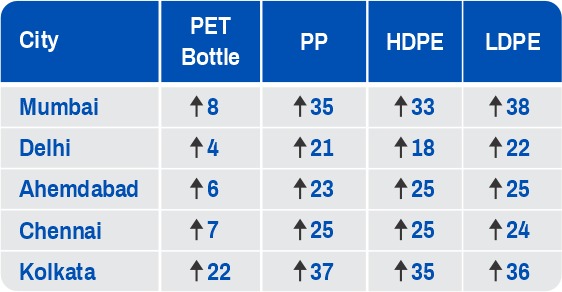
In addition to the rise in feedstock costs, market participants reported improved buying activity and restocking interest from converters and traders at the beginning of the month. As a result, prices for key grades such as PET Bottle, Polypropylene (PP), HDPE and LDPE recorded noticeable increases across several regional markets.
Among the major markets, Kolkata and Mumbai recorded the most pronounced price increases, particularly in Polypropylene and LDPE Film grades, reflecting stronger regional supply constraints and active trading sentiment. In contrast, Delhi witnessed relatively moderate increases, suggesting a more gradual market response compared with other trading hubs.
Key Factors Supporting the Price Increase
Several interconnected market developments contributed to the strengthening trend in polymer prices during the first week of March.
1. Feedstock Cost Increase
A key factor behind the price rise was the increase in upstream feedstock prices, particularly propylene and ethylene, which are essential raw materials used in the production of polypropylene and polyethylene. Rising feedstock costs directly translated into higher polymer production costs, pushing market prices upward.
2. Domestic Producer Price Adjustments
Major domestic polymer producers implemented price revisions for polyethylene and polypropylene grades, which further supported the upward momentum in spot markets.
3. Supply Tightness and Global Market Sentiment
Supply uncertainties linked to geopolitical tensions and logistics disruptions in key global supply regions contributed to tighter availability of polymer material across Asian markets.
4. Inventory Replenishment Activity
Following a relatively calm February, converters and traders resumed inventory replenishment, which strengthened buying activity and reinforced bullish market sentiment.
Market Outlook
Looking ahead, market sentiment remains cautiously firm, with participants closely monitoring feedstock trends and supply dynamics. If propylene and ethylene prices continue to remain elevated, polymer markets may sustain their upward momentum or stabilize at higher price levels in the near term. However, the extent of further increases will largely depend on downstream demand from packaging, automotive, and consumer goods sectors, as well as the willingness of converters to absorb higher raw material costs.
Should demand remain steady and supply conditions continue to tighten, the market could witness further incremental price adjustments in the coming weeks, while any slowdown in buying activity may lead to short-term price stabilization after the recent rally.

 Elevate User Experience Expertise



 +91 90098 44333
 info@polymint.co